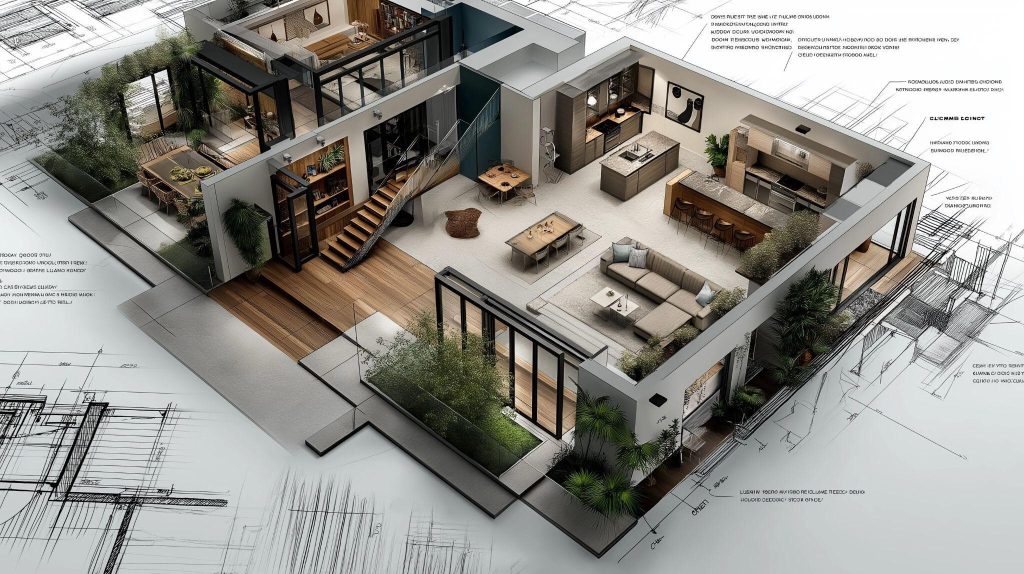
Open-plan living isn’t just a trend in Australia anymore; it’s practically the default. And for good reason! Knocking down that wall between the kitchen and living room creates a sense of light, space, and connection that a warren of small rooms just can’t match. It’s perfect for entertaining, keeping an eye on the kids, and feeling like your home is one big, airy sanctuary.
But let’s be honest. Sometimes, one big room can feel like… well, one big room. Where do the toys go when you have guests? How do you focus on work when the TV’s on six metres away? And where do you hide the breakfast dishes during a video call?
This is where the magic of smart zoning comes in. It’s the design superpower that lets you have the best of both worlds: the spacious feel of open-plan, with the defined function of separate rooms. It’s about creating invisible boundaries that organise your life without building actual walls.
Think of it as creating “rooms within a room.” Here’s how to do it in your Sydney home.
1. Change the (Floor) Level
One of the most effective ways to define a zone is to literally raise or lower it. A sunken lounge area, often called a “conversation pit,” instantly creates a cosy, intimate space for relaxing, distinct from a dining or kitchen area. Conversely, a raised platform for a dining table gives a sense of occasion and separation. Even a simple change of two or three steps can make a huge psychological difference. It’s a subtle cue that says, “This area has a different purpose.”
2. Play with Materials and Texture
Your floor isn’t just something you walk on; it’s your biggest zoning tool. Using different materials is a classic and beautiful way to delineate space.
Use durable, easy-clean polished concrete or tiles in the kitchen zone.
Transition to warm, soft engineered timber in the living area.
Define a reading nook with a plush rug.
The change underfoot guides the flow of the home and tells each area’s functional story.
3. Get Strategic with Joinery and Furniture
Forget bulky walls. Clever joinery and furniture placement are your new best friends.
A double-sided bookshelf or a low cabinet can perfectly separate a living area from a home office without blocking light or sightlines.
A long kitchen island naturally creates a boundary between the cooking and living zones, while providing crucial storage and seating.
Simply arranging your sofa with its back to the rest of the space creates a definitive line for the lounge area.
This is where thoughtful design truly shines. A well-planned floor plan considers these zoning elements from the very start, ensuring your furniture has a natural place to live. This is a principle professional designers focus on, where the goal is to build not just houses, but highly functional homes tailored to how you actually live.
4. Set the Mood with Lighting
Lighting is the jewellery of interior design and a master of zoning. Ditch the single, glaring overhead light.
Use pendant lights clustered over a dining table to anchor that zone.
Install warm, dimmable downlights or LED strips in joinery to highlight a lounge area.
A statement floor lamp creates a perfect pool of light for an armchair, defining a quiet corner for reading.
Different lighting scenes allow you to morph the mood of each zone throughout the day.
5. Colour and Ceiling Tricks
A subtle shift in paint colour on a single feature wall can gently signal a change in space. Similarly, playing with your ceiling can define zones.
A lowered or coffered ceiling over the dining area can make it feel more intimate and defined.
Exposed beams can run across one zone to highlight its length and direction.
Why This Matters for Your Renovation or New Build
Smart zoning isn’t just an interior design afterthought; it’s a foundational concept for a functional home. When planning a house extension or a new build, considering these zoning strategies from the architectural stage means your home will work for you, not against you. It solves the clutter and chaos problem of a purely open plan, creating dedicated spots for work, play, and relaxation—all within a connected, light-filled environment.
Ready to move beyond the basic open box and create a home with intelligent, flowing spaces? It starts with a design that understands the nuances of modern living.
For a home that feels both spacious and seamlessly organised, talk to the team at House Design Solutions about integrating smart zoning into your renovation or new home plans.