
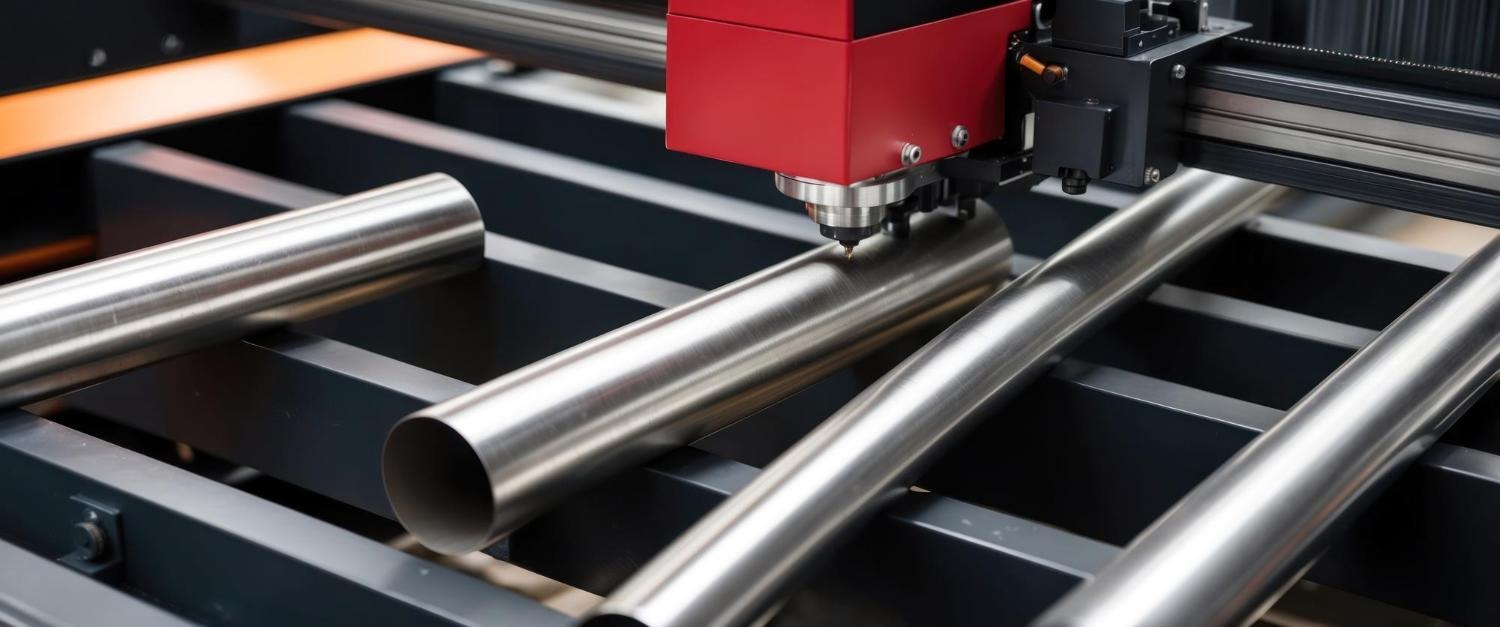
Modern metal fabrication has moved far beyond manual cutting and basic machining. Today’s industrial environments demand repeatable accuracy, tighter tolerances, and designs that integrate directly into downstream assembly. Laser processing has emerged as a critical enabler in this shift, especially when dealing with tubular and hollow metal components used across structural, architectural, and industrial applications.
Tubular metal parts present unique challenges due to their geometry, wall thickness variation, and structural role within assemblies. Advanced laser processing techniques allow these components to be cut, shaped, and prepared with a level of consistency that traditional methods struggle to match. Within fabrication hubs such as the UAE, custom tube laser cutting in Dubai has become central to projects requiring precision, scalability, and engineered reliability.
Evolution of Laser Processing in Tubular Metal Fabrication
Laser processing of tubular metals has evolved alongside improvements in CNC control, motion systems, and beam stability. Early approaches relied on flat-bed systems adapted for round sections, often resulting in alignment issues and secondary finishing work. Modern tube laser systems are purpose-built to handle round, square, and custom profiles with synchronized rotation and linear movement.
These advancements have enabled fabricators to process tubes as complete components rather than raw stock. Holes, slots, miters, and complex contours can be produced in a single setup. This evolution has significantly reduced material handling, improved dimensional accuracy, and supported the integration of laser-cut tubes into modular fabrication workflows.
Material Compatibility and Structural Integrity Considerations
Not all metals respond to laser energy in the same way. Tubular components used in structural and industrial applications often include mild steel, stainless steel, and aluminum alloys. Each material presents different thermal characteristics that influence cut quality, edge finish, and heat-affected zones.
Advanced laser systems are calibrated to balance power, speed, and assist gases to maintain structural integrity. For load-bearing tubes, preserving wall thickness consistency and minimizing micro-deformation is critical. Controlled laser processing ensures that components meet mechanical requirements without introducing weaknesses that could compromise performance in demanding environments.
Managing Heat Input in Thin-Walled Tubes
Thin-walled tubular sections are particularly sensitive to thermal distortion. Excessive heat input can lead to warping or localized weakening, especially in long or unsupported lengths. Modern laser systems address this through optimized cutting paths and adaptive power control.
By distributing heat evenly and maintaining consistent beam focus, fabricators can process thin-walled tubes while retaining their dimensional stability. This capability expands design possibilities for lightweight structures without sacrificing strength or reliability.
Precision Cutting for Complex Joint Interfaces
Tubular joints often serve as connection points within frames, supports, and architectural elements. Laser processing enables highly accurate joint preparation, including saddle cuts and angled intersections that align precisely during assembly.
This level of precision reduces the need for manual fitting and rework. When joint geometry is consistent, welding quality improves, and structural loads are distributed as intended. Precision joint cutting is especially valuable in applications where visual alignment and mechanical performance are equally important.
Tolerance Control in High-Volume Fabrication
Consistency becomes critical when tubular components are produced at scale. Even minor deviations can accumulate across assemblies, leading to misalignment or increased corrective work. Laser processing offers tight tolerance control through automated positioning and repeatable cutting parameters.
In high-volume environments, this repeatability supports predictable outcomes across batches. Fabricators can maintain quality standards while meeting production schedules, which is essential for industrial projects with strict delivery timelines.
Role of Automation and Digital Design Integration
Laser processing systems are closely integrated with digital design tools. CAD and CAM data drive cutting paths, allowing designs to move directly from engineering to production with minimal interpretation. This integration reduces errors and ensures that fabricated components reflect design intent.
Automation also plays a key role in material handling and process sequencing. Tube loading, rotation, and unloading can be synchronized with cutting operations. The result is a streamlined workflow that supports complex geometries while maintaining efficiency and consistency.
Supporting Multi-Axis Cutting Requirements
Many tubular components require cuts at varying angles and orientations. Multi-axis laser systems accommodate these requirements by coordinating linear and rotational movement. This capability enables the production of features that would otherwise require multiple setups or specialized tooling.
Multi-axis processing is particularly valuable for components used in frames, supports, and engineered assemblies. It allows designers to specify functional geometries without being constrained by manufacturing limitations.
Reducing Secondary Operations
One of the major advantages of advanced laser processing is the reduction of secondary operations. Features such as holes, slots, and alignment marks can be incorporated during the initial cutting stage. This eliminates additional drilling, milling, or marking steps.
Reducing secondary operations improves throughput and lowers the risk of dimensional inconsistencies. It also enhances overall production efficiency by consolidating multiple processes into a single, controlled operation.
Improving Assembly Readiness
Laser-processed tubular components are often assembly-ready upon completion. Clean edges, accurate dimensions, and consistent feature placement allow parts to move directly into welding or fastening stages. This readiness supports lean manufacturing principles and reduces bottlenecks in fabrication workflows.
For complex projects, assembly-ready components also improve coordination between fabrication and installation teams, ensuring that on-site work proceeds smoothly.
Quality Assurance and Inspection in Laser Tube Processing
Quality assurance is integral to advanced laser processing. Modern systems incorporate monitoring tools that track cutting performance, beam stability, and positional accuracy. These controls help identify deviations early in the process.
Inspection methods often include dimensional verification and visual assessment of cut quality. For structural applications, maintaining consistent quality across all tubular components is essential to meeting engineering specifications and safety requirements.
Final Thoughts on Laser Processing and Fabrication Capabilities
Advanced laser processing techniques have reshaped how tubular metal components are designed, fabricated, and assembled. By combining precision, automation, and digital integration, these systems support complex geometries while maintaining consistency and efficiency. The ability to process tubes as finished components rather than raw stock has become a defining feature of modern fabrication.
Within this context, fabrication environments that offer tube laser cutting services play an important role in supporting industrial, architectural, and structural projects. Companies such as Morshedi operate within this evolving landscape, focusing on precision metal fabrication capabilities aligned with contemporary engineering and manufacturing requirements.